 By Dunke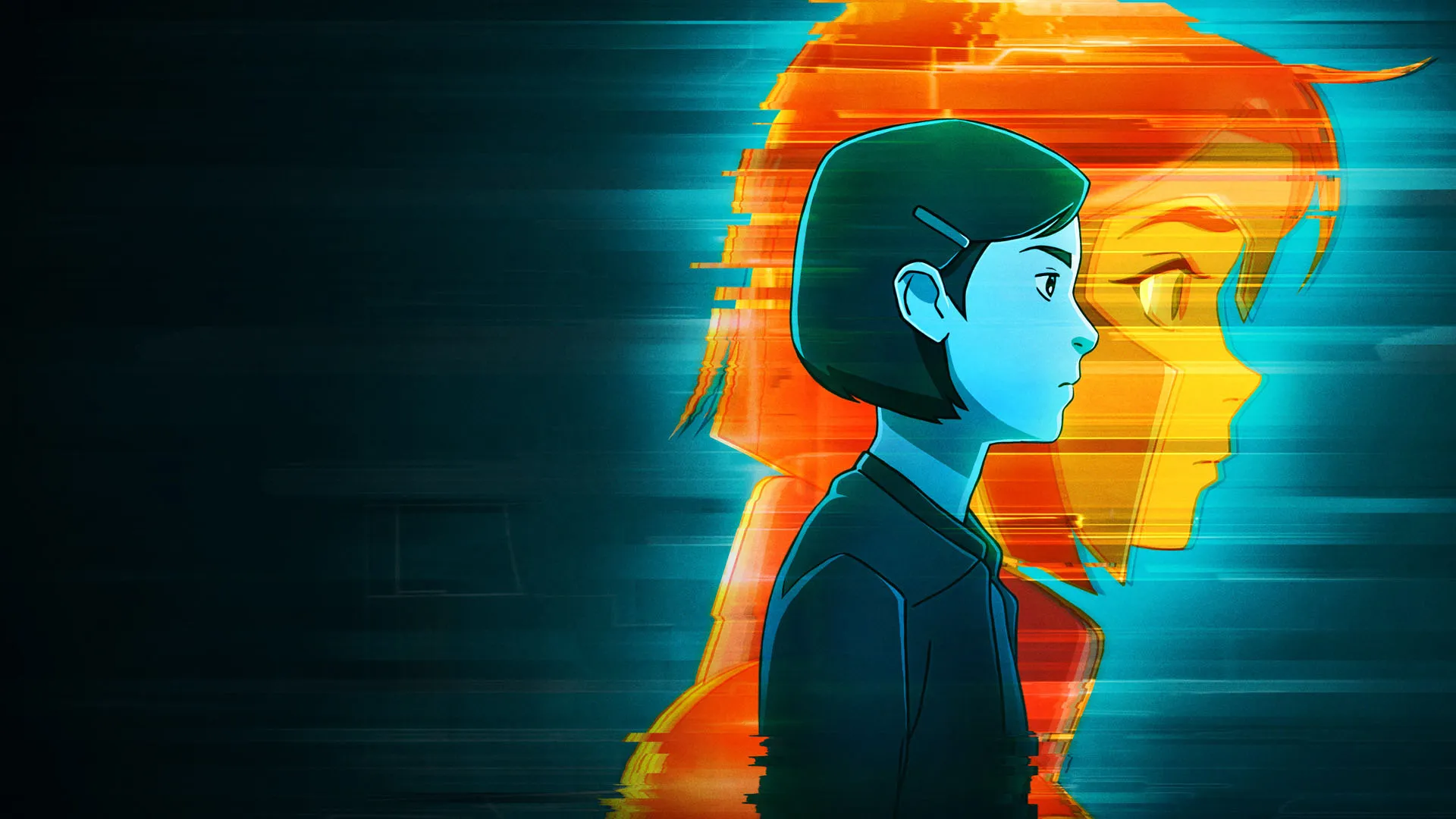
| Image: Titmouse |
The show Pantheon has popped up in my life a few times throughout recent years. First time I saw it was just getting a trailer recommended in my YouTube-feed, then at another point one of our regular streaming update articles at work would feature the show as its second season premiered. Pantheon piqued my interest both times, due to its techy demeanor, and a premise of technology versus humanity that sounded positively delightful. The show promotes a sense of grounded science fiction.
The Blade Runner and Terminator fan part of my brain was hit, but it wasn’t until one of my co-workers brought the show up again that I actually pressed play on the first episode.
And then promptly forgot about it again.
Life just gets busy, y’know?
It wasn’t until I started my minor in uni – The Internet is Broken, but we can Fix it – that Pantheon resurfaced on my radar. Once again due to the recommendation of a companion who’s taste in media I’d come to respect greatly. According to her, the general vibe and themes presented in Pantheon were actually very applicable to the subjects we would be tackling in our semester of learning.
So screw it. Life’s busy, but I’ll make the time for it. Upon completion of the second season, my jaw met the floor.
Uploaded
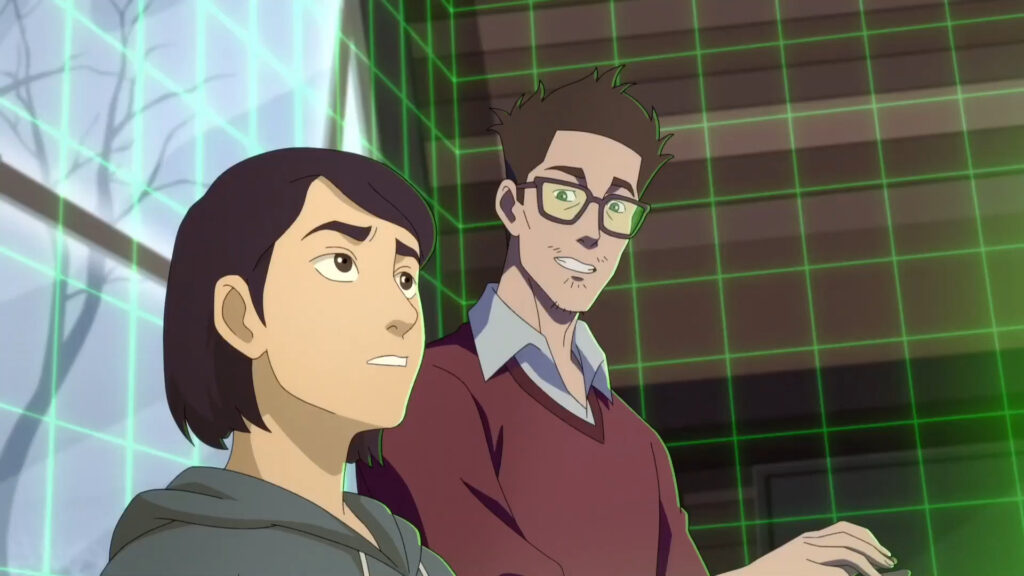
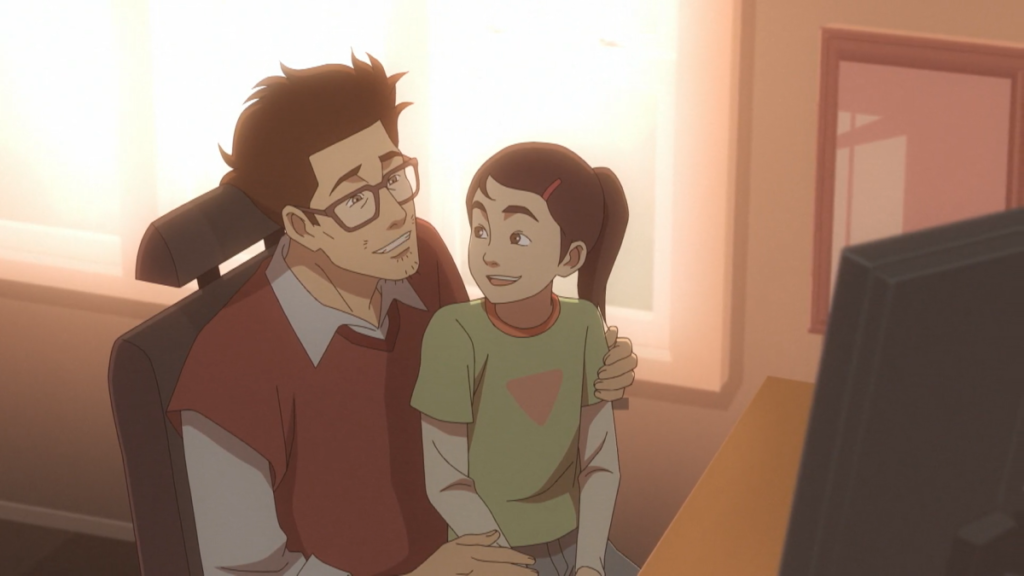
In case you need a refresher – and be warned, after this I’m spoiling the everloving shit out of the series – Pantheon primarily follows two characters. There’s Maddie, a high schooler whose father passed away a few years ago, and the gifted yet lonesome hacker Caspian. The gist of the series’ premise is that all of a sudden Maddie is approached by a digitalized version of her father David, who had his brain ‘uploaded’ into the cloud to become a so-called Uploaded Intelligence. Pandora’s Box, who?
Over the course of the first season, it is revealed that there are many more of these UI’s – David Kim is scarcely the only one. A constant across all the Uploaded Intelligences however is that if they use too much power, their recreated brains, their beings really, eventually wear out as well. Like a regular human body. And let that be the one thing that wasn’t the point of the entire process. Caspian is quite literally built to crack this flaw, to find the solution and create ‘integrity’.
He succeeds in this, and the way he manages this has to be my favourite aspect of Pantheons mythology. The show quite simply states that to crack integrity, to be quite literally saved from the degradation inflicted upon us by our own creations, we need other people.
Caspian discovers, thanks to Maddie’s input, that to cure the flaw he needs to ‘add’ the concept of human connections to a UI’s code. It’s an aspect that’s missing from the uploaded versions of people’s brains, but essential to their survivability. It’s not that UI’s are incapable of human connections before being cured, but it is an essential part of the human condition that can’t simply be uploaded.
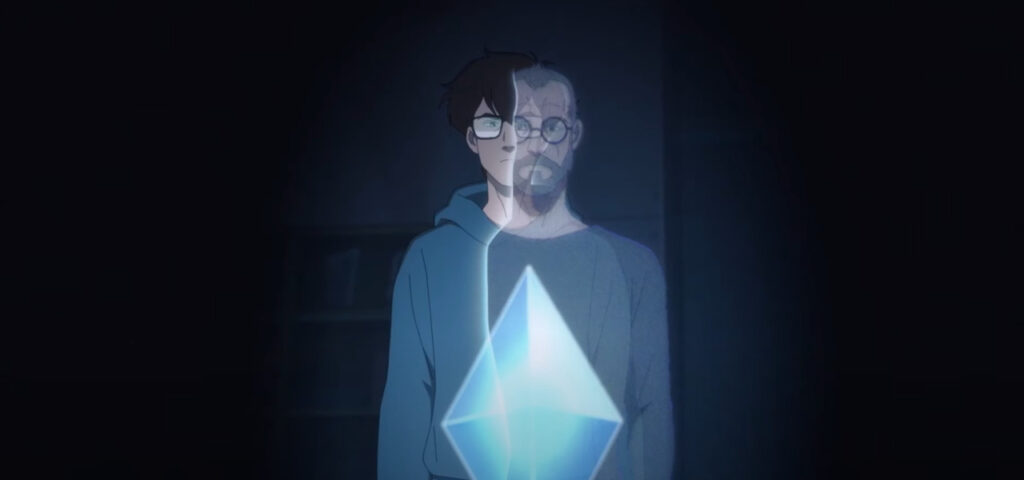
Honestly, the message is pretty straightforward. To survive, to stay sane and ‘connected’, we need other people. To tether us, to remind us of who we are. Even when it gets extremely complicated, with servers, corporations – those tend to make things harder than they should be – and secret data centers. That’s the core.
Examplified
Despite being a self-proclaimed introvert, I wholeheartedly subscribe to this message. Pantheon brings in a few compelling scenarios for UI’s to really connect with their desired connection to others. A whole conflict is dedicated to Maddie’s complicated feelings towards seeing her dad again. At first, she’s enthusiastic when he returns to her life, but with the appearances of subsequent back-up versions – after his second time dying in front of her eyes – that enthusiasm is tempered, and Maddie ultimately ends up having a more cynical look upon dying for a life in the Cloud. One that’s ultimately changed by the return of Caspian, who she builds a romantic connection with over the course of the series.
It also appears in smaller instances, like the Israeli human-turned-UI lie detector with an incredibly over the top accent, Yair, who we see carries immense sadness over his brother leaving the family when he was but a boy. Or when we see the entire backstory of Olivia and Farhad, where they slowly learn to love each other due to really living the others memories. Yet another example of the importance of connection, albeit to its most extreme.
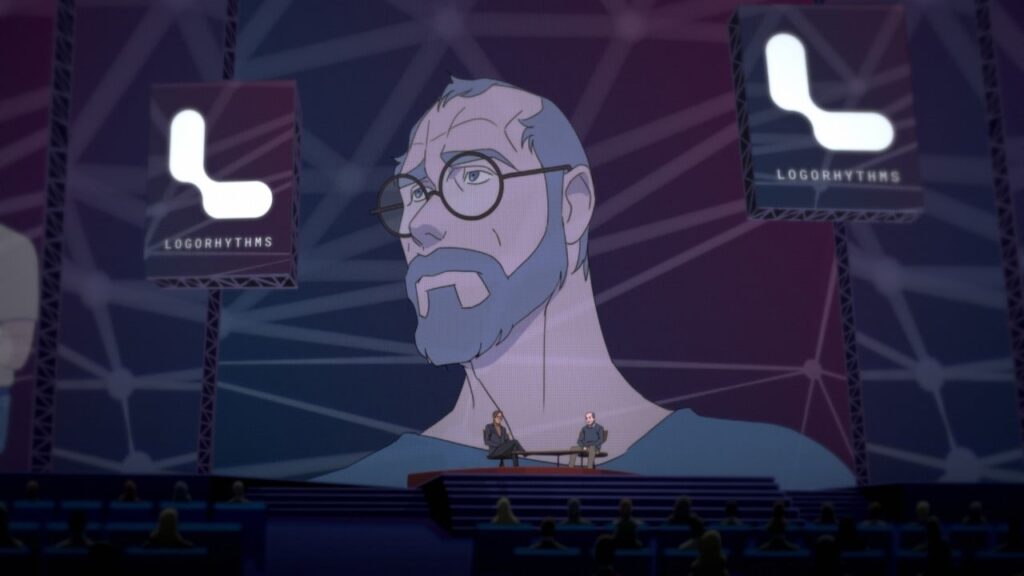
Ultimately, I think the theme is fully realized within Stephen Holstrom, Pantheons central antagonist. He’s so driven by his work, which stems from the traumatic death of his girlfriend – and by the way, he probably would’ve inflicted that same fate upon an innocent young actress to drive Caspian further into becoming more Holstromish. An understandable motive, terrible execution. And Holstrom keeps everyone at arms length. He plays the role of the tortured author, not sharing his thoughts with Renée, and eventually even blocking her from reaching him until ‘the work is complete’. Stephen is devoid of human connection, and it dooms him.
IRL
It’s even something I can equate to my own, personal, experiences. Hell, we probably all can. It’s about the people I’ve met throughout the years, the ones who taught me things, about myself, about the way the world works, maybe lessons I didn’t want to learn. I learned that chasing one thing for three years, ignoring all the signs that it wouldn’t work out, was a bad idea! But I also learned that when a door is open, even somewhat, it’s worth it to chase that for a dozen years. And it helps that people have held the door open for me, continue to do so and let me know when I stumble or mess up.
When I bring it back to this minor, I can’t help but feel it too. For years I saw school as a chore, something to get to the aforementioned open door. Not really looking at the people around me. Maybe they didn’t make it easy, maybe I just didn’t put in the effort. But now I did. I saw people, people that I felt at ease with, and whom I can only hope feel somewhat similar towards me. Doesn’t matter if they don’t, because what they bring me is already so valuable.

Not saying that I’d become a maniacal tyrant of the digital world, but I was certainly okay with my own work consuming me. Taking this class has shown me a lot, and watching this show helped me understand it. Both Pantheon and the minor teach us to look at technology critically, but not necessarily cynically. It has its benefits. It can mean a lot to people. It can help a lot of people. That’s so extremely meaningful, and the show plays it so earnestly. And so sci-fi, I love it.
I think Pantheon is a fantastic dive into the human condition, studied through the lens of technology. Though I’m still wrapping my head around the Matrix-like mindbenders that are thrown at us in the final two episodes, it’s easy to see that the series has a lot to say. It tells it well, if we’re willing to listen.
I have many more words to spend on the way it ties into things we study in our minor, but I’ll also not shoot it all out immediately, aye? Maybe it’ll come in handy at some point.