 By Dunke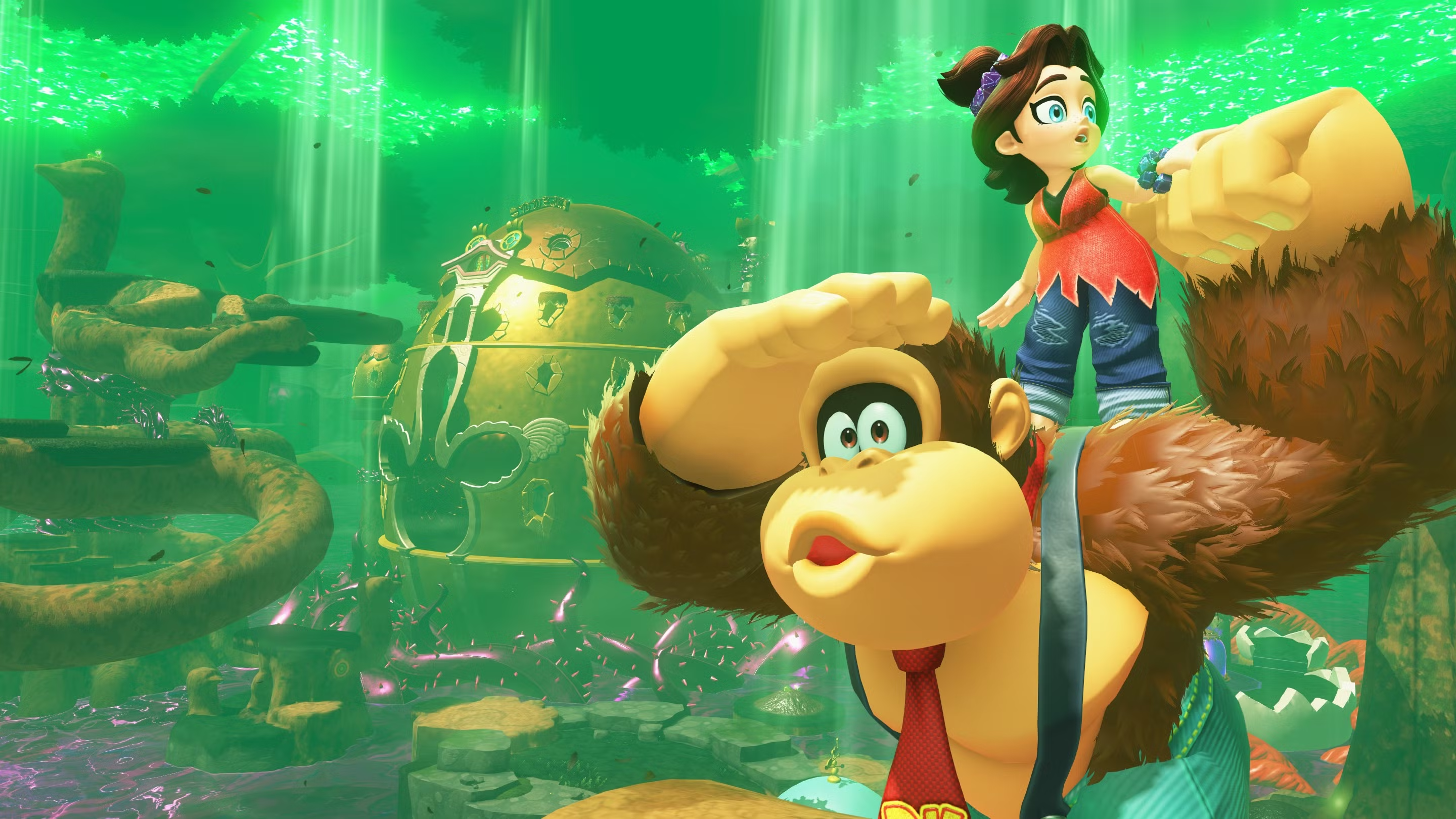
| Image: Nintendo |
If you’re involved with the gaming sphere at all, chances are high that you’ve seen some things about the Nintendo Switch 2 and its divisiveness by now. Nintendo held a special Direct presentation for the console this Wednesday, where the company unveiled more of the consoles features, like GameChat because they finally figured out that nobody wants to use a mobile app for that.
The line-up of Switch 2 games was also showcased, and if you ask me it’s a good blend of first-party and third-party titles so far. Hopefully Nintendo manages to keep developers on board with their system, while continuing to make whacky games of their own like Donkey Kong Bananza – where destruction is your purpose. It’d be a shame if their efforts to bring the Switch 2 up-to-speed with modern day hardware turn out to be in vain.

Nevertheless, it’s not particularly the games, hardware or features folks are grabbing pitchforks for. In fact, the most upsetting part about the whole Switch 2 ordeal wasn’t even in the Direct itself. Only after we heard the final click, and the gates of the Nintendo Store were flooded with fans eager to pre-order the latest hardware, certain buttons were pressed.
The Nintendo Switch 2 is retailing for 469,99 euros, or 449,99 dollars. To me this seems like a valid price point considering the upgraded hardware, which isn’t just a bigger screen and magnetic Joy-Con, but also offers the ability to play in 4K and 60fps at the same time if games are optimized properly. It’s all thanks to DLSS, and if the images for Nintendo’s The Legend of Zelda: Breath of the Wild, Tears of the Kingdom, Metroid Prime 4 Beyond and Mario Kart World are to be believed these games are capable of some incredible technical feats. The question is if you can afford to see them.

Psst, hey! This article is part of my newsletter The Draftbook where I cover a multitude of topics every week. So do you like this piece? Be sure to subscribe and get much, much more.
Alongside the reveal of the console’s price, it also immediately became clear that Nintendo is after more of your hard earned cash. A physical copy of Mario Kart World costs 89,99 euros, and the same in dollars. The digital edition, available from the Nintendo eShop, will set you back 79,99 dubloons. Donkey Kong Bananza costs 79,99 in stores and 69,99 on the digital platform.
This is an incredible sum of money. There’s no getting around that. With Nintendo charging that much, the days of purchasing a AAA videogame for 60 bucks is over. Nintendo is hardly the one to blame for upping the costs from that price point, Sony and Xbox have been charging 70 dollars for their big releases ever since the next-gen consoles hit shelves, but to see the boards in Kyoto decide on an even higher price stings.

Games are entertainment. A lot of entertainment are also art. And thus, at least to me, games are culture. Raising the prices so much makes the medium less accessible to those with lower incomes, gating them from worthwhile experiences. Additionally it drives consumers towards the digital ecosystems these studios are building, where you don’t really own a copy of the game considering it’s bound to your account. If you lose access to it, the 80 dollars you just spent might as well be gone. Reduced to atoms.
Nintendo, as a business, is fully aware of this. It needs to keep shareholders happy. That’s how businesses are being run. The unfortunate truth of the matter is that games cost a lot more money to produce than they once did, and for the longest time AAA releases were still priced at a consistent 60 bucks. If one would adjust for inflation, a lot of games we played years ago should’ve been priced a tad higher. This article by gameindustry.biz explains the concept very well.

Paying 80 to 90 bucks for a game that developers have poured years of their lives into, that breaks hardware-limitations and offers an experience you couldn’t get anywhere else is worth it to me. However, I can not pay for that consistently, nor can many others. To add to that, you never know if a game is going to click, or if you will get a satisfactory experience out of it. It’s very reasonable to wait more, see if the game is good by reading reviews, or via word-of-mouth. But isn’t it kind of depressing that we have to exercise so much caution for a hobby that’s supposed to inspire and entertain us?
I’m not cheering on the price increase, even though I must admit this is something that was simply waiting to happen. In a utopia we wouldn’t live in a capitalistic society like this, and games could be freely accessed by anyone. To me it’s important to hold companies accountable. If you’re gonna charge me 80 dollars for the new Donkey Kong game, it better be worth it.